The rubber lining experts.
Since 1920.
Shop lining, on-site lining, hot vulcanisation — in compounds engineered for your exact chemical environment.
The lining process
Six controlled steps. Every layer documented. Every bond verified.
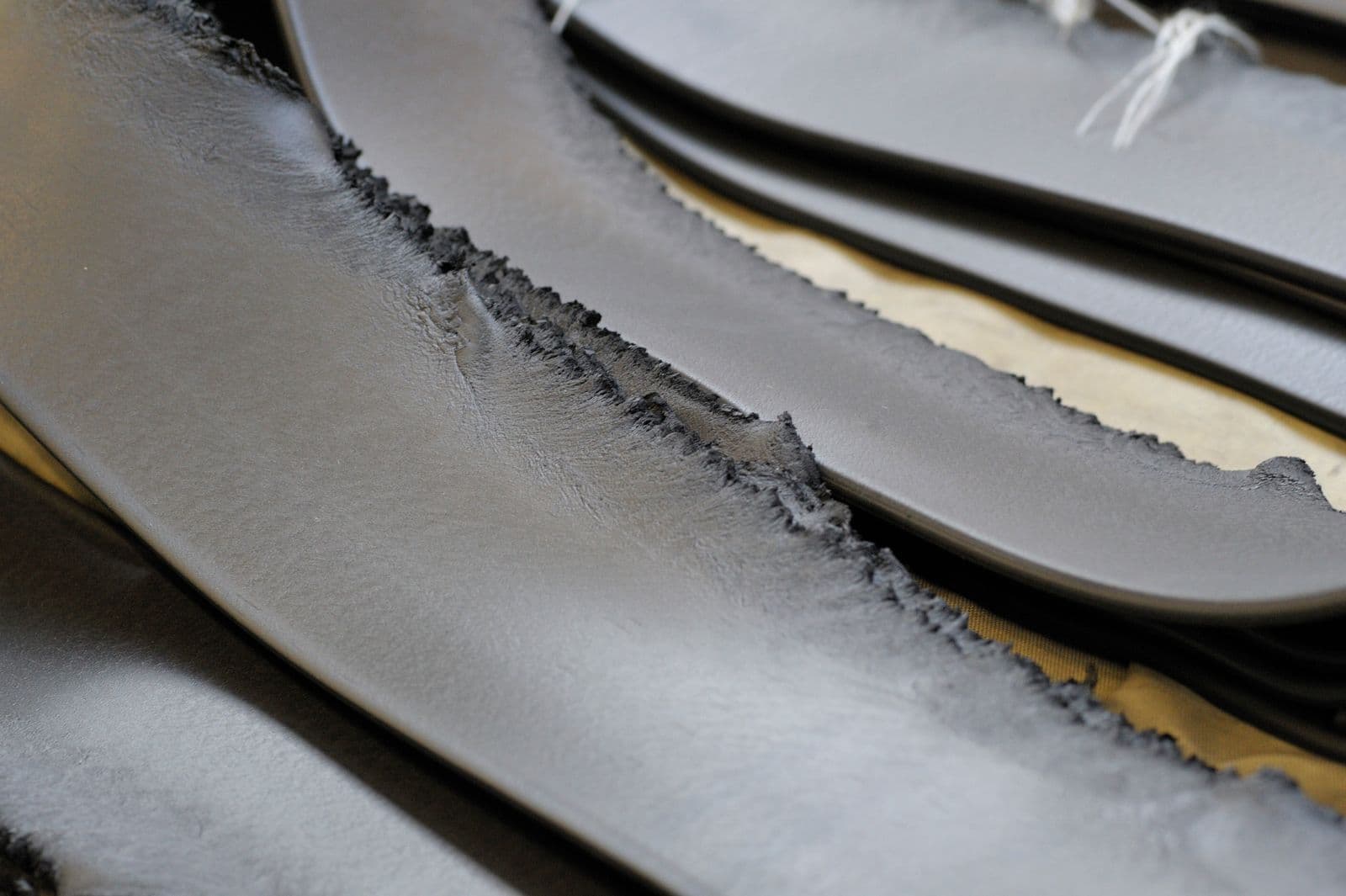
Surface Preparation
Sandblasting to SA 2.5/3 standard. The foundation for lasting adhesion — every subsequent layer depends on this step.
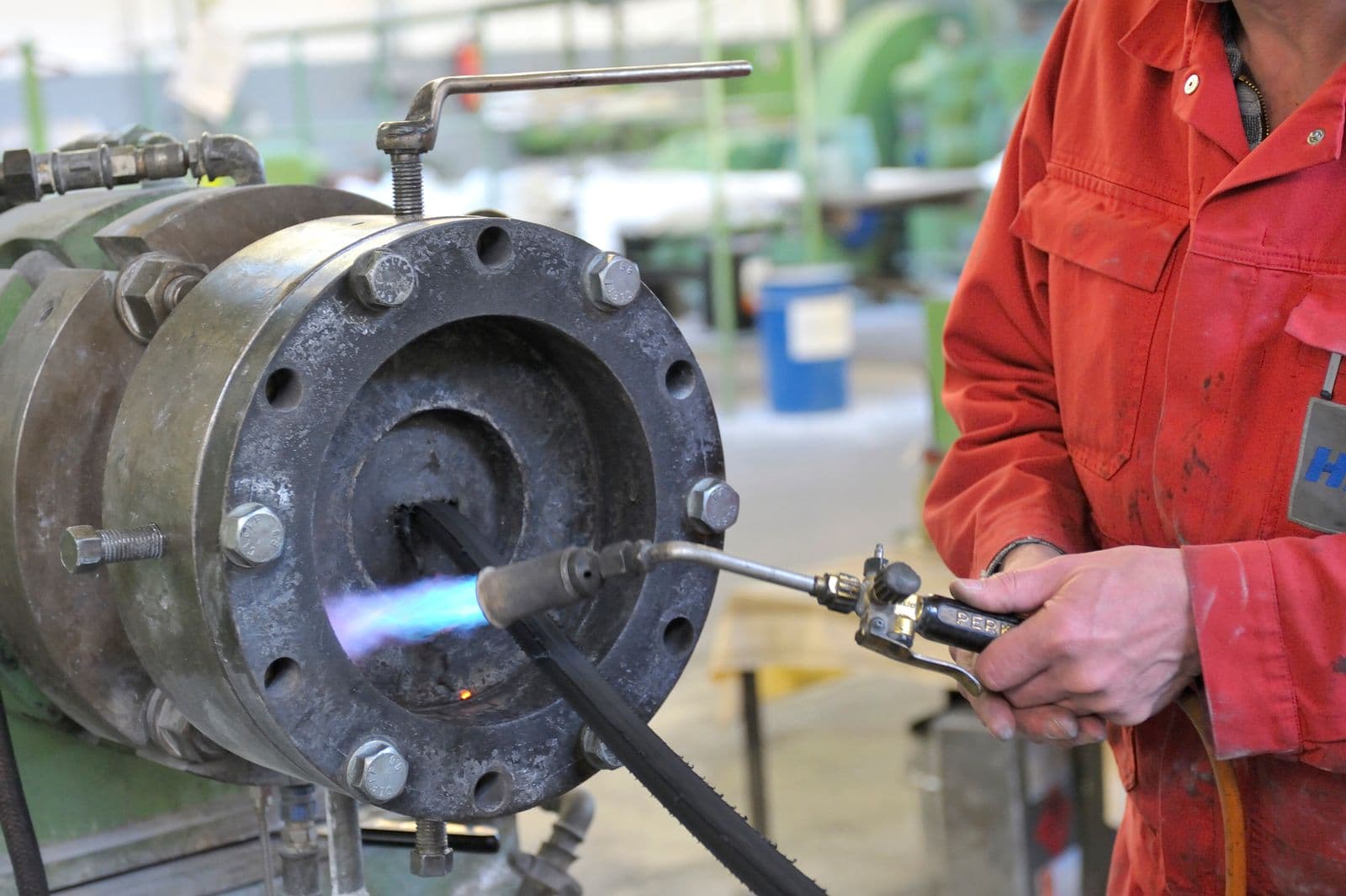
Primer Application
Chemical bonding agent matched to substrate material and selected lining compound. Applied under controlled conditions.
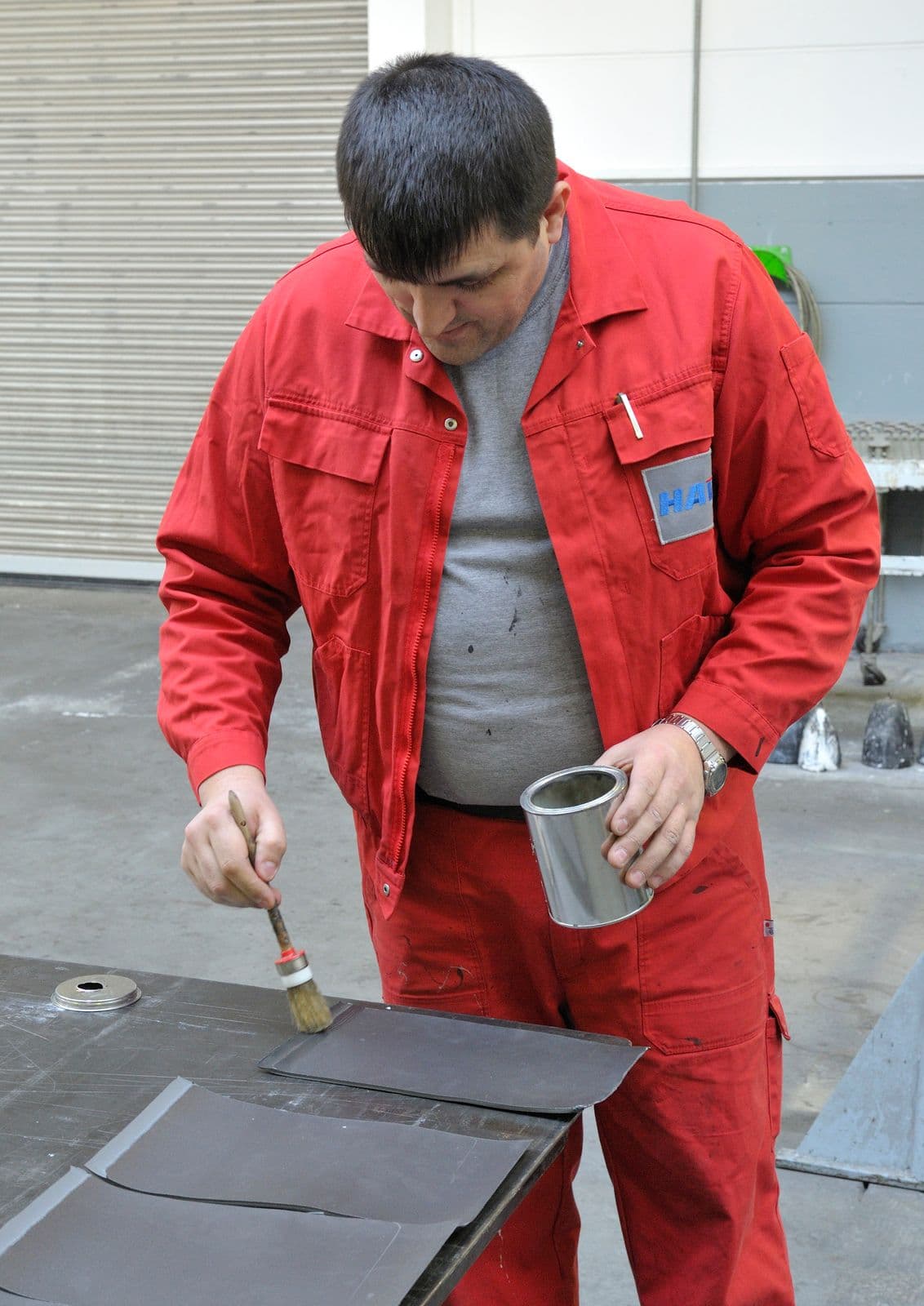
Adhesive System
Multi-layer adhesive application for maximum bond strength between substrate and rubber. Cure times strictly observed.
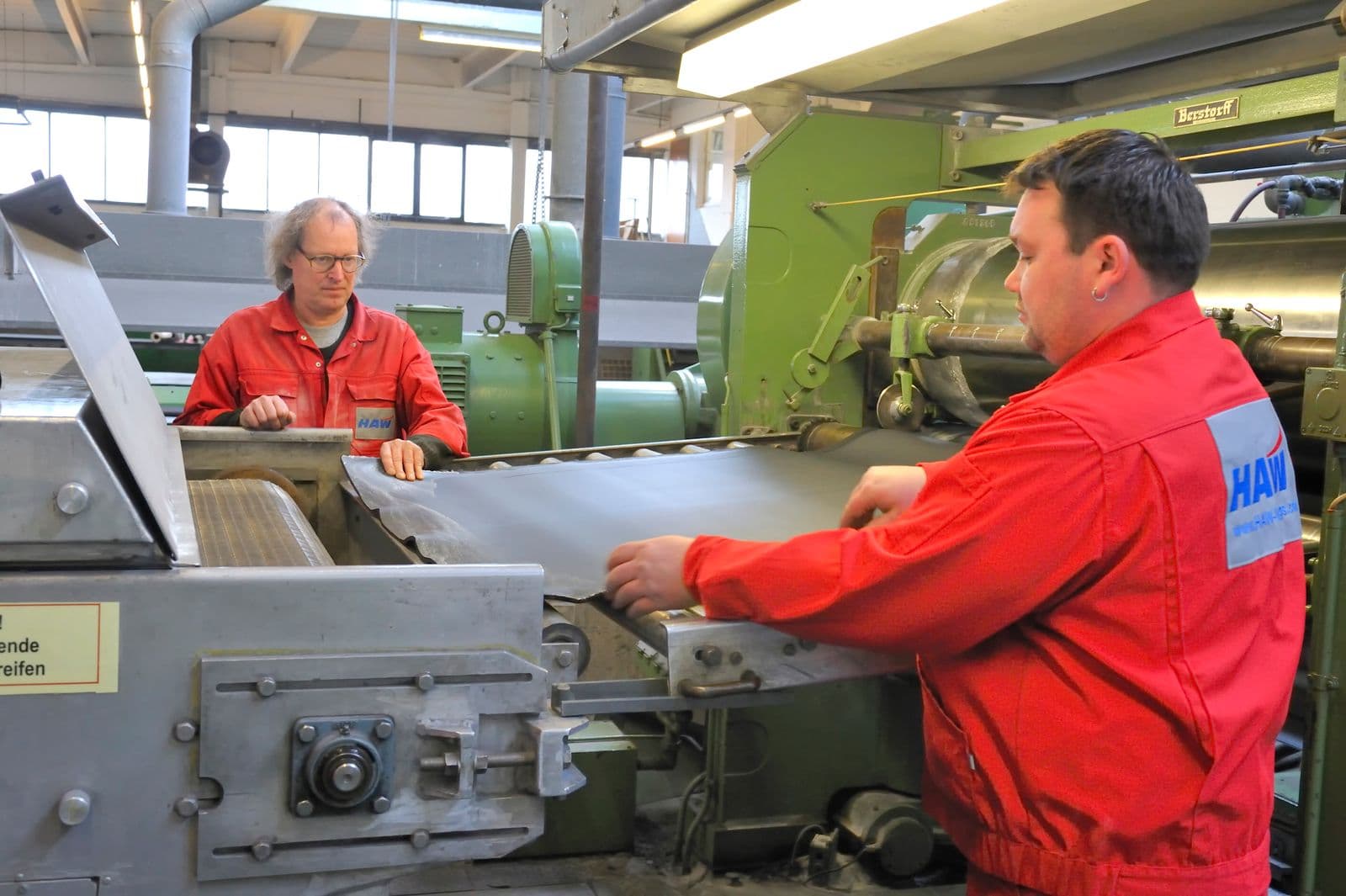
Rubber Application
Hand-laid rubber sheets, precision-cut for complex geometries. Seams overlapped and rolled to eliminate air pockets.
Vulcanisation
Autoclave cure at controlled temperature and pressure, or on-site vulcanisation for immovable equipment. Europe's largest autoclave ensures consistent results.
Quality Testing
Spark test at 15kV minimum to detect pinholes. Adhesion pull test to verify bond strength. Ultrasonic thickness measurement at documented grid points. Full documentation before handover.
Right rubber for the right chemistry
Each elastomer has a specific resistance profile. We select and compound based on your exact process conditions.
Soft rubbers
7 products| Code | Base | Temp | Resistant to | Sheet |
|---|---|---|---|---|
| HAW-W01 | CIIR | ≤ 100 °C | hydrofluoric acid | |
| HAW-W03 | CR | ≤ 80 °C | acid at lower concentrations · lye, brines | |
| HAW-W06 | BIIR | ≤ 100 °C | alkaline and acids · oxidizing agents at lower and medium concentrations +1 | |
| HAW-W06L | BIIR | ≤ 100 °C | alkaline and acids · oxidizing agents at lower and medium concentrations +1 | |
| HAW-W08 | BIIR | ≤ 125 °C | nitric acid (up to 30%) · acid mixtures +1 | |
| HAW-W12 | CSM | ≤ 80 °C | alkaline and acidic media · oxidizing acids (with exceptions) | |
| HAW-W31 | IR/SBR | -45 to 100 °C | alkaline and acidic at medium concentrations |
Hard rubbers
5 products| Code | Base | Temp | Resistant to | Sheet |
|---|---|---|---|---|
| HAW-H05 | IR | ≤ 80 °C | alkaline and acid fluids with the exceptions of oxidizing fluids · aliphatic hydrocarbons (with exceptions) and alcohol | |
| HAW-H22 | IR | ≤ 130 °C | alkaline and acid fluids with parts of organic solvents | |
| HAW-H22R | IR | ≤ 125 °C | alkaline and acid fluids with the exception of oxidizing fluids | |
| HAW-H90 | IR | ≤ 100 °C | alkaline and acid fluids with the exceptions of oxidizing fluids · aliphatic hydrocarbons (with exceptions) and alcohol | |
| HAW-H94 | IR/SBR | ≤ 100 °C | alkaline and acid fluids with the exceptions of oxidizing fluids |
Resin lining and repair systems
3 products
Europe's largest vulcanisation autoclave
Shop lining or on-site?
Controlled environment. Maximum quality.
Equipment transported to Bockenem, lined in climate-controlled conditions, vulcanised in autoclave.
- Climate-controlled application environment
- Autoclave vulcanisation for superior bond strength
- Full QC laboratory access during production
- Ideal for vessels, tanks, and pipe sections
- Typical turnaround: 2–6 weeks
Where the equipment is. We come to you.
HAW's qualified fitters travel worldwide to apply rubber linings on large, immovable equipment.
- No transport of oversized equipment required
- Applied to installed or immovable structures
- On-site vulcanisation (ambient or steam cure)
- Ideal for tanks, containment areas, floors, chimneys
- Available on site, worldwide
Europe's largest vulcanisation capacity
Autoclave vulcanisation produces superior bond strength and consistent cure that ambient methods cannot match.
Have a project to discuss?
Send us the scope, a drawing or a specification. Our engineers come back with a solution, a price and a programme.